
 By
By 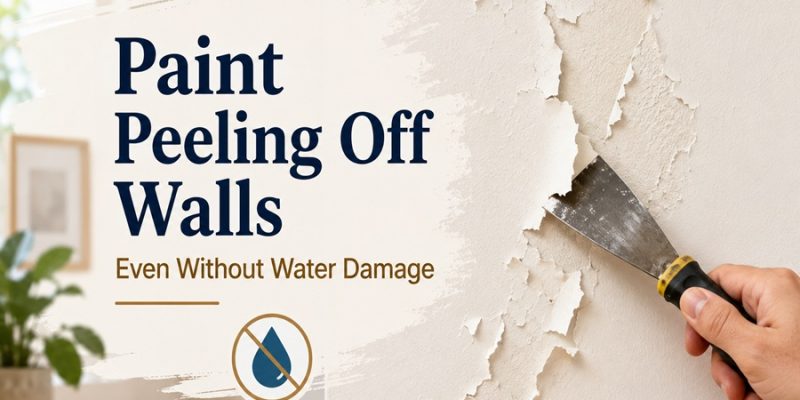
But you said there is no water damage. No leaks, no stains, no damp. So what is peeling your paint?
The answer is almost always the same. If it is not water, it is adhesion. The paint is letting go of the surface because it never bonded properly in the first place, or because something is stressing that bond.
When paint peels without any water involved, the cause is a failed bond. The main culprits are poor surface prep (dust, grease, or a glossy surface that was not sanded), incompatible layers (latex over oil-based paint with no primer), low-quality or expired paint, applying paint too thick or too thin, painting in bad conditions, and heat or UV near sunny windows making old paint brittle. Fix the cause, prep properly, prime, and the new coat will hold.
Why does paint peel if there is no moisture?
Paint holds on by gripping the surface underneath. Anything that gets between the paint and that surface, or weakens the grip over time, leads to peeling.
Think of it like tape. Tape sticks to clean, smooth surfaces. It will not stick to dust, grease, or a slick glossy coat. And even good tape lets go if it is stretched and heated day after day.
Paint behaves the same way. Here are the non-water reasons it fails.
Cause 1: Poor surface preparation
This is the single biggest non-moisture cause, and painters see it constantly.
Paint bonds to whatever it touches. If the wall has dust, grease, soap film, or grime on it, the paint bonds to that layer instead of the wall. When that thin layer lets go, the paint comes with it.
Glossy surfaces are just as bad. A shiny, unsanded finish gives paint nothing to grip. It sits on top and flakes off.
The fix is all in the prep:
- Clean the surface thoroughly. Remove dust, grease, and soap residue.
- Scuff-sand glossy areas to give the new paint texture to hold.
- Prime bare or patched spots so the topcoat has a consistent surface to bond to.
Cause 2: Incompatible paint layers
This one catches people off guard, especially in older homes.
Latex paint does not bond well over old oil-based paint. If someone rolled water-based paint straight over an oil-based coat without priming, the two layers never truly joined. The new paint peels off in sheets.
Old layers are not always obvious. When the systems clash, failure follows even careful work.
The fix: identify what is already on the wall. If you are going latex over oil, use a bonding primer designed to bridge the two. When in doubt, prime.
Cause 3: Low-quality or expired paint
Cheap paint often lacks the binders that give a film its grip and flexibility. Expired paint has the same problem. It may go on fine and fail within a year or two.
Signs point to the product when paint peels quickly on a properly prepped, dry wall with no leaks nearby. Good interior paint should last many years. If it fails fast, suspect the product, the prep, or a layer mismatch.
The fix: use quality paint from a sealed, in-date can, and match the paint to the surface and the room.
Cause 4: Application mistakes
How the paint went on matters as much as what went on.
- Too thick. Heavy, over-applied coats do not cure evenly. On ceilings especially, the weight plus gravity speeds up failure.
- Too thin. Over-thinned paint or a coat spread too far leaves a weak film with poor adhesion.
- Bad conditions. Painting when it is too hot, too cold, or humid, or not letting each coat dry fully, weakens the bond as it cures. Condensation on a cool wall during curing hurts adhesion even without a “leak.”
The fix: follow the label. Apply even coats, respect dry times, and paint in reasonable temperature and humidity.
Cause 5: Heat, sun, and thermal stress
Here is a cause the moisture-focused articles rarely explain, and it is a common answer to “why is it peeling with no water?”
Paint near sunny windows, or on walls that get direct afternoon sun, takes a beating from heat and UV. Two things happen:
- The heat dries the paint out and makes it brittle, so it cracks. Cracking leads straight to peeling.
- Temperature swings make the paint layer expand and contract, which stresses the bond until it lets go.
UV also breaks down the paint chemically. Oil-based paints are especially vulnerable, fading and then flaking.
The fix: for sun-blasted spots, use a quality, flexible paint rated for the conditions, and address the heat if you can with shades or window film.
Quick reference: is it water or adhesion?
| Clue | Likely cause |
|---|---|
| Stains, bubbling, soft drywall, musty smell | Hidden moisture (even if you have not found the leak) |
| Peeling on a clean, dry wall away from water | Adhesion: prep or product |
| Peels in large sheets, older home | Incompatible layers (latex over oil) |
| Cracking then flaking near sunny windows | Heat and UV |
| Failed within a year, no leaks | Poor prep, low-quality paint, or bad conditions |
One honest caution: sometimes “no water damage” just means the moisture is hidden. Slow, invisible dampness in a wall cavity acts like an adhesion problem. If peeling clusters near a bathroom, kitchen, exterior wall, or ceiling, rule out hidden moisture before repainting.
How do you fix peeling paint so it does not come back?
Never paint over peeling paint. New paint bonds to the failing layer and peels off on the same timeline.
Do this instead:
- Scrape and sand off all loose, flaking paint.
- Clean the surface completely. Remove grease, dust, and film.
- Repair any damaged spots and let everything dry fully.
- Prime, using a bonding primer if you are covering a glossy or oil-based surface.
- Apply quality paint in even coats, respecting dry times.
Skip the prep and you will be scraping again next year.
Frequently asked questions
Why is my paint peeling if there is no leak?
Almost always because of adhesion. The surface was not cleaned or sanded, a bonding primer was skipped, the paint was low quality, or heat and UV made an old coat brittle. Fix the bond and it holds.
Can I just paint over peeling paint?
No. The new coat bonds to the loose paint underneath and fails just as fast. You have to scrape, sand, clean, and prime first.
Does primer stop paint from peeling?
It helps a lot, but only if the real cause is handled. Primer gives the topcoat something to grip, but it will not save paint applied over grease, gloss, or hidden moisture.
Why does paint peel near windows that get sun?
Heat and UV dry the paint out, make it brittle, and cause it to expand and contract until the bond fails. Use a durable, flexible paint there and reduce heat with shades or film.
How long should interior paint last?
Quality interior paint, applied over a well-prepped surface, should hold up for many years. If it peels within a year or two, the cause is prep, product, incompatible layers, or moisture, not normal wear.







Comments