
 By
By 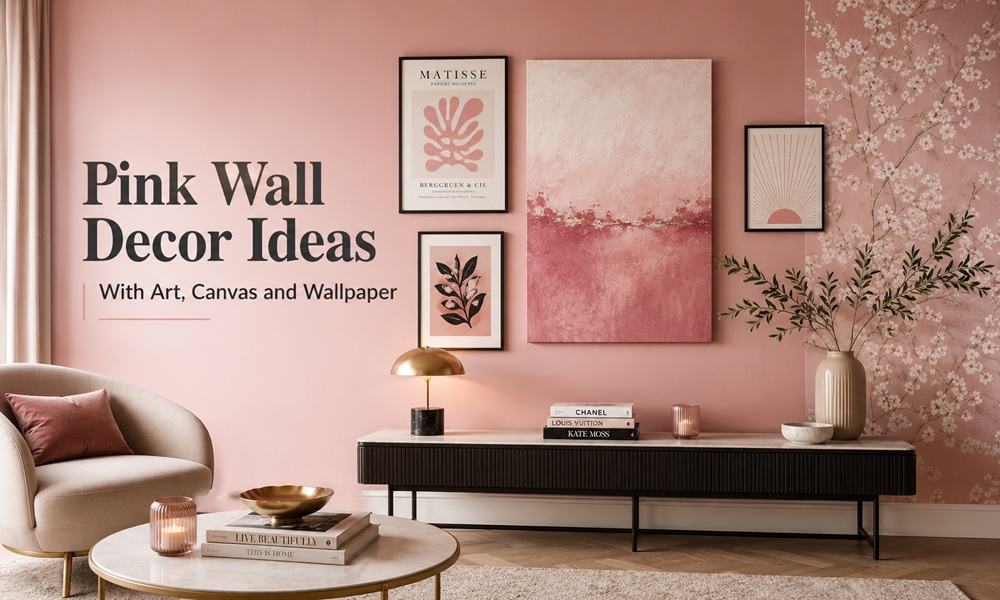
Pink has grown up. It is no longer just a nursery color or a passing craze. Search interest for pink room ideas spiked sharply after the Barbie moment, and Barbiecore became one of the fastest-growing decor aesthetics on Pinterest. But the pink people want now is sophisticated, personal, and easy to live with.
Your walls are the fastest way in. Art, canvas prints, and wallpaper each bring pink into a room differently. Here is how to use all three well.
What is the easiest way to add pink to a wall?
Start with art. A single piece of abstract or contemporary art is the lowest-risk entry point, because you can swap it out as your taste shifts. You get color and personality without committing to paint or paper.
If you want more impact, layer up: art for flexibility, canvas for scale, wallpaper for full drama. Most rooms only need one or two of these, not all three.
Which pink shade should you choose?
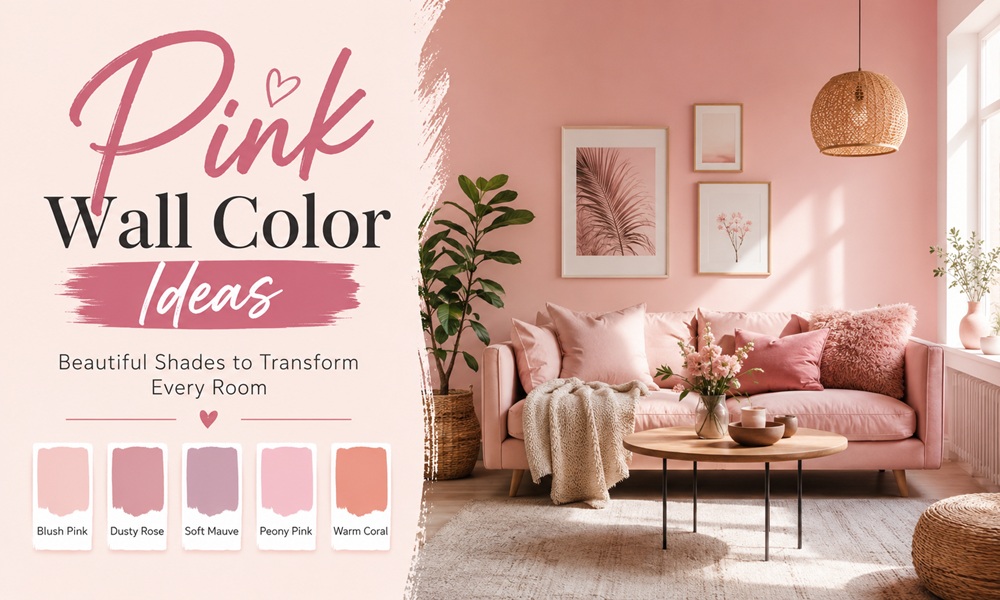
Shade is everything with pink. The wrong tone reads flat; the right one reads designer. Use this quick guide.
| Shade | Mood | Works best in |
|---|---|---|
| Blush | Soft, calm, elevated | Bedrooms, living rooms, small spaces |
| Dusty rose | Muted, timeless, versatile | Almost any room, modern or traditional |
| Millennial pink | Fresh, broadly liked | Rentals and resale-friendly spaces |
| Mauve / antique rose | Deep, sophisticated | Low-light rooms, cozy dens |
| Hot pink / fuchsia | Bold, fun, energetic | Accent walls, powder rooms, art |
| Magenta | Modern, purple-tinted | Contemporary and maximalist rooms |
For low-light rooms, lean into the deeper shades. A north-facing room or a basement actually benefits from a saturated rose, because the color leans into the shadow instead of fighting it.
How do you decorate a wall with pink art?
Pink art is the simplest upgrade. A few approaches that consistently work:
- One large abstract piece as a calm anchor above a sofa or bed.
- A gallery wall mixing pink tones with jewel greens, blues, and oranges. Color-blocking art, where bold shapes are the subject, is having a real moment.
- Hand-painted or freehand motifs, which bring a soft, human touch back after years of flat, controlled surfaces.
- Vintage prints in pink and sepia tones for a collected, storied feel.
The sizing rule pros use
Most people hang art too small. Your wall piece should fill roughly 60% to 75% of the empty wall, meaning the part not covered by furniture or molding. To find your range, measure the blank wall’s height and width, then multiply each by 0.6 and again by 0.75. That gives you the smallest and largest sizes that will look intentional rather than lost.
How do you use pink canvas prints?
Canvas gives you scale and softness. A large pink canvas fills a wall cheaply and can be refreshed whenever trends move on.
- Choose a canvas that echoes one accent already in the room, like a cushion or a rug.
- Go big over the sofa. A single oversized canvas beats a scatter of small frames.
- For a modern look, pick abstract shapes; for a warmer room, choose florals or soft landscapes.
- Layer a canvas with a couple of framed prints for a curated, gallery feel.
How do you style pink wallpaper?
Wallpaper is the boldest move and the one that transforms a room fastest. If full walls feel like a leap, removable wallpaper gives you the look with none of the commitment, which is ideal for renters.
Ideas that land well:
- One feature wall behind a bed or desk, rather than the whole room.
- Pink-and-gold patterns for an instantly luxe backdrop.
- Textured pink plaster or limewash finishes, the current designer favorite. Venetian plaster and Moroccan clay in warm pink add depth you can almost feel.
- Large-scale prints over fussy small patterns, which make a room feel bigger.
What colors pair best with pink walls?
Pink is more flexible than its reputation suggests. Reliable pairings:
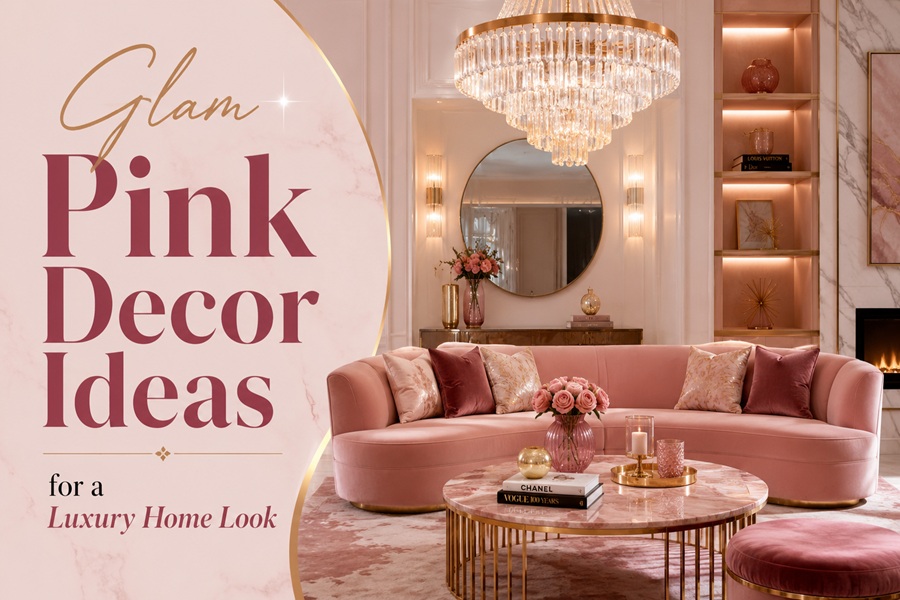
- Pink and gold or rose gold: a foolproof, luxurious combination.
- Pink and sage or forest green: earthy, grounded, and surprisingly natural.
- Pink and neutrals (white, cream, greige): calm and easy.
- Pink and cherry red: once a fashion faux pas, now a designer favorite.
The detail almost everyone gets wrong
Lighting can make or break a pink wall. Warm white bulbs in the 2700K to 3000K range enhance pink’s warmth and glow. Cool fluorescent light does the opposite, draining pink toward a dull gray. Before you blame the paint or the print, check the bulb. This single fix rescues more pink rooms than any repaint.
A simple pink wall formula
If you want structure, borrow the designer 60-30-10 approach: 60% your lightest pink, 30% a medium tone, 10% your boldest accent. When mixing several pinks, keep them within two or three tones of each other so the wall feels layered, not chaotic.
Common questions about pink wall decor
Is pink good for resale?
Neutral pinks like blush and dusty rose appeal to the most buyers. Keep pink on easily changeable elements such as art, canvas, or an accent wall rather than every surface.
Can pink work in a small room?
Yes. Light, cool pinks visually expand a space. Avoid hot pinks on all four walls in a tiny room, since they advance and can shrink it.
How do I add pink without painting?
Start with wall art, canvas prints, and removable wallpaper. All three are commitment-free and easy to change.
The takeaway
Pink walls are about intention. Pick the right shade for your light, let art and canvas carry flexible color, and save wallpaper for the wall you most want people to notice. Warm your bulbs, mix your tones with care, and pink stops reading as girly and starts reading as designed.






Comments