
 By
By 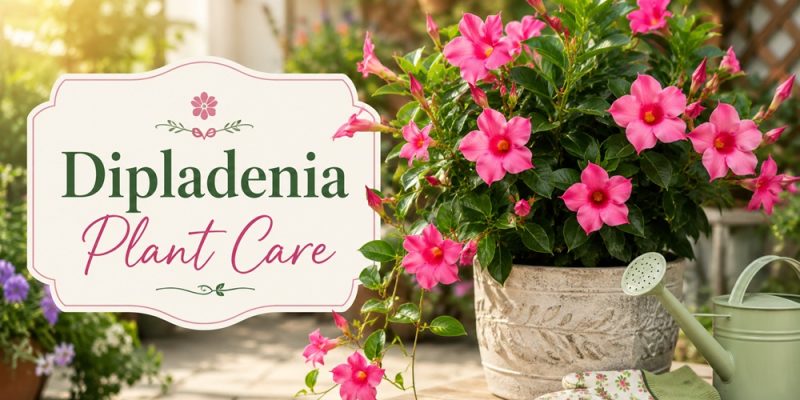
Dipladenia is one of the most rewarding container plants you can grow. Trumpet-shaped blooms in red, pink, white, and coral run from late spring through the first frost.
It is also one of the most mislabeled. Most plants sold as “dipladenia” are actually a close relative, and treating them as a tough, drought-proof houseplant is where people go wrong.
Get the light, the watering rhythm, and the winter plan right, and a single plant can thrive for a decade or more.
Care at a glance: Full sun, 6 or more hours a day. Water when the top 1 to 2 inches of soil dry out. Fast-draining mix, never soggy. Feed every 2 to 4 weeks in the growing season. Bring indoors before nights drop below about 55°F. Not drought-tolerant, not a low-light plant, and toxic to pets if eaten.
What is dipladenia, really? (the mandevilla mix-up)
This is the confusion that quietly kills plants.
Dipladenia and mandevilla are close relatives and are sold under both names, often interchangeably. In practice, the plants labeled dipladenia are usually compact, bushy cultivars of Mandevilla sanderi, including the popular Rio series in red, pink, and white.
Why it matters:
- Growth habit differs. Dipladenia types stay compact and mound or trail, ideal for pots and hanging baskets. Mandevilla is a vigorous climbing vine that wants a trellis.
- Care is nearly identical, but the compact Rio cultivars are more sensitive to cool nights and inconsistent moisture than older hybrids.
- The dangerous myth. Calling it a “low-maintenance dipladenia” leads people to underwater it, skip frost protection, or prune at the wrong time.
Verify by the stems. Slender, flexible stems that climb or cascade point to a sanderi type. Stiff, upright branches suggest something else.
How much light does dipladenia need?
Unlike most houseplants, dipladenia is a sun-lover.
It needs at least 6 hours of direct sun to bloom well. In its native tropical range it grows in open, bright spots and forest edges. A south-facing patio or balcony is ideal.
In partial shade, 4 to 6 hours, it will grow fine but flower far less. Shade-grown plants make leaves and few blooms.
One caution: acclimate a plant to stronger sun over 7 to 10 days in spring so the leaves do not scorch. A well-watered plant can handle hot midday sun; a stressed one cannot.
How often should you water dipladenia?
This is the make-or-break skill. Dipladenia wants moist but never soggy roots. It resents wet feet and rots easily.
The rule: water when the top 1 to 2 inches of mix feel dry, then soak thoroughly and let it drain. Empty the saucer after 10 to 15 minutes.
Frequency shifts with the season and the pot.
| Season and temperature | Watering rhythm |
|---|---|
| Peak summer (75 to 85°F) | Every 2 to 3 days in terra-cotta, when top inch is dry |
| Spring and fall (60 to 75°F) | Every 4 to 6 days |
| Winter indoors (60 to 65°F) | Every 10 to 14 days |
| Full dormancy (cool, dark storage) | About once a month |
When in doubt, underwater slightly. A dry dipladenia wilts and recovers. A waterlogged one rots and often does not.
What soil and feeding does it need?
Soil. Fast drainage is non-negotiable. Use a free-draining mix with organic matter. Avoid heavy clay soils that hold water. A slightly snug pot promotes more flowers; an oversized pot stays wet too long and slows blooming.
Feeding. Regular, modest feeding fuels continuous buds.
- Spring and summer: a balanced liquid feed at half strength every 2 to 4 weeks, or a slow-release fertilizer per label. A higher-phosphorus formula supports flowering.
- Fall and winter: pause feeding when growth slows.
How do you overwinter dipladenia?
In frost-free zones (roughly USDA 9 to 11), dipladenia lives outdoors year-round. Everywhere colder, it is a summer container plant that needs a winter plan.
You have two options.
Option 1: Bright indoor rest. Bring it in before nights fall below about 55°F. Place it at your brightest window. Water sparingly, letting the top inch dry between drinks. Stop fertilizing. Expect slow growth and a rest period until spring.
Option 2: Cool dormancy. Store it in a cool, dark garage around 45 to 50°F. Let it go dormant. Water only about once a month to keep it from drying out completely. New shoots emerge from the crown in spring.
Either way, wait until the frost danger passes before moving it back outdoors, then resume normal care. Gardening community answers echo the same plan: bring it in before first frost, water minimally through dormancy, and reintroduce it slowly in spring.
Avoid cold drafts, overhead watering, and pruning during winter dormancy.
Troubleshooting: why is my dipladenia not blooming or dropping leaves?
Diagnose in this order: light, then water, then temperature, then nutrition. Most problems resolve once the first two are dialed in.
| Symptom | Likely cause | Fix |
|---|---|---|
| Leaves but few or no flowers | Too little sun | Move to 6+ hours of direct light |
| Wilting, limp leaves | Underwatering | Soak thoroughly, then resume the dry-check rhythm |
| Yellowing, mushy stems | Overwatering or poor drainage | Improve drainage, let soil dry more between waterings |
| Sudden leaf drop | Cold shock or draft | Move away from cold windows and vents |
| No winter growth | Normal dormancy | Reduce water, stop feeding, wait for spring |
Insight most guides skip
A few details that rarely make the top results:
- It is toxic to pets. The sap can irritate, and ingestion is a concern. Keep it out of reach of cats and dogs. If a pet eats it, contact animal poison control right away.
- Prune after flowering, not in winter. Light pruning and pinching after a bloom flush encourages bushier growth and more flowers. Pruning during dormancy sets it back.
- A snug pot means more flowers. Resist the urge to over-pot. Roots that fill the container trigger better blooming.
- One plant becomes many. A healthy dipladenia yields dozens of cuttings over its life, so you can expand your collection for free.
Frequently asked questions
Is dipladenia the same as mandevilla?
They are close relatives sold under both names. Most “dipladenia” are compact cultivars of Mandevilla sanderi. Care is nearly the same, but dipladenia types stay bushier and suit pots, while mandevilla climbs.
Can dipladenia grow indoors year-round?
Yes. Give it your brightest window, keep it from cold drafts, and water less in winter when growth slows. It typically blooms spring through fall and rests in winter.
Why is my dipladenia not flowering?
Almost always not enough sun. It needs at least 6 hours of direct light to bloom well. Check light first, then watering.
How cold can dipladenia tolerate?
Bring it indoors before nights drop below about 55°F. It is a tender tropical and does not survive frost outdoors in cold zones.
Is dipladenia poisonous to cats and dogs?
Yes, it is considered toxic to pets. Keep it out of reach and seek help from poison control if a pet eats any.











Comments