
 By
By 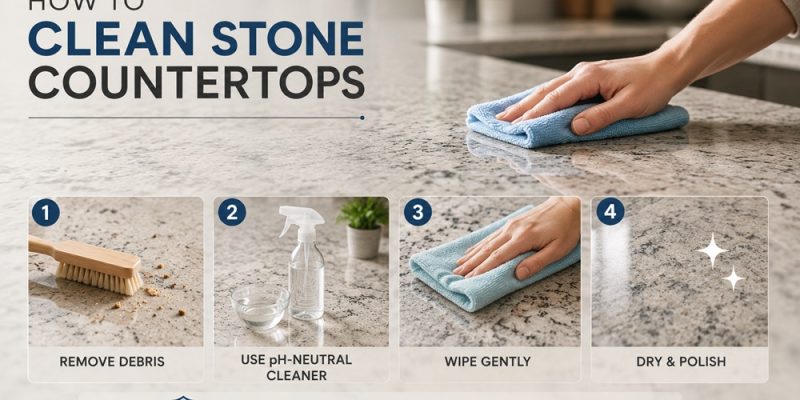
Quick answer: Clean stone countertops daily with warm water, a few drops of pH-neutral dish soap, and a soft microfiber cloth. Wipe, rinse, then dry to prevent streaks. Never use vinegar, lemon, bleach, or abrasive scrubbers on natural stone, they etch and dull the surface. Seal porous stone like granite and marble on a regular schedule, and blot spills immediately rather than wiping them across the surface.
Stone is durable but chemically sensitive. The mistake that ruins most countertops is not dirt, it is the wrong cleaner. Acids eat the finish, and the damage is often permanent.
What is the safe way to clean any stone countertop?
The daily routine is the same across granite, marble, and quartz.
- Wipe crumbs and dry debris away first so you are not grinding grit into the surface.
- Mix a gentle solution: warm water with a few drops of pH-neutral dish soap.
- Wipe with a soft microfiber cloth, not a scrubbing pad.
- Rinse with clean water to remove soap film.
- Dry with a fresh cloth to stop water spots and streaks.
That is it. Stone rewards gentleness. Harsh chemistry does far more harm than any everyday spill.
What should you never use on stone countertops?
This is where finishes get destroyed. Keep these off natural stone entirely.
- Vinegar, lemon, and other acids. They etch marble and can dull granite’s polish. Etching leaves a permanent cloudy mark.
- Bleach and ammonia. They break down sealer and can discolor the stone over time.
- Abrasive powders and scouring pads. They scratch the polished surface.
- Generic “all-purpose” sprays. Many are acidic or contain degreasers too harsh for stone.
- Glass cleaner on natural stone. The ammonia strips the seal.
A recurring warning across kitchen and cleaning forums like Reddit’s r/Countertops: people reach for a lemon-and-vinegar “natural” cleaner, then discover dull rings on marble that no polishing removes at home. Natural does not mean stone-safe.
Care by stone type
Different stones have different vulnerabilities. Match your method to your material.
| Stone | Porous? | Main risk | Key rule |
|---|---|---|---|
| Granite | Yes | Dulling, staining if unsealed | Seal regularly, pH-neutral cleaner only |
| Marble | Yes, soft | Etching from acids, scratches | Never use acid, blot spills instantly |
| Quartz (engineered) | No | Damage from harsh chemicals and heat | No need to seal, avoid bleach and abrasives |
| Quartzite (natural) | Yes | Staining, etching | Seal like granite, treat like natural stone |
| Soapstone | No, but soft | Scratches, needs oiling | Mineral oil to darken, no sealer needed |
Granite
Granite is hard and heat-tolerant, but its polish dulls if you use acids, and it stains if the seal wears off. Clean with pH-neutral soap and water, and reseal on a schedule. To test the seal, drop a little water on the surface. If it beads, the seal is intact. If it soaks in and darkens the stone, it is time to reseal.
Marble
Marble is the diva. It is calcium-based, so any acid, even a splash of orange juice or a wine spill, etches it. Blot spills the instant they happen. Use only pH-neutral cleaner. Consider a dedicated marble poultice for stubborn stains rather than scrubbing.
Quartz (engineered)
Engineered quartz is non-porous, so it never needs sealing and resists stains well. Its weakness is chemicals and heat. Skip bleach, skip abrasive pads, and always use a trivet, because direct heat can scorch or crack the resin binder.
How do I remove a stain from stone?
For a set-in stain on porous stone, a poultice draws it out.
- Mix baking soda with a little water into a thick paste (use hydrogen peroxide instead of water for oil stains on light stone).
- Spread it over the stain about a quarter-inch thick.
- Cover with plastic wrap and tape the edges.
- Leave it 24 to 48 hours to pull the stain from the pores.
- Remove, rinse, and dry.
Repeat if needed. This is slow but far safer than aggressive scrubbing.
How do I fix an etch mark?
Light etching on marble can sometimes be buffed with a marble polishing powder made for the job. Deeper etching usually needs a professional stone restorer to hone and re-polish. There is no acidic quick fix, more acid only makes it worse.
How to keep stone looking new
- Use cutting boards. Knives scratch even hard stone and dull the finish.
- Use trivets and coasters. Protect against heat and ring stains.
- Wipe spills fast. Especially anything acidic on marble or quartzite.
- Reseal porous stone on schedule. Granite, marble, and quartzite all benefit.
- Dry after cleaning. A quick buff with a dry cloth prevents streaks and water spots.
FAQ
Can I use Windex or all-purpose cleaner on granite?
No. Ammonia and many all-purpose sprays strip the sealer and dull the polish over time. Stick to pH-neutral soap and water or a cleaner labeled stone-safe.
How often should I seal a stone countertop?
It depends on the stone and use. Test with the water-bead check periodically. When water stops beading and soaks in, reseal.
Is vinegar really that bad for stone?
Yes on natural stone. Its acidity etches marble and dulls granite. It is one of the most common causes of permanent countertop damage.
Do quartz countertops need sealing?
No. Engineered quartz is non-porous. Just avoid harsh chemicals, abrasives, and direct heat.










Comments