
 By
By 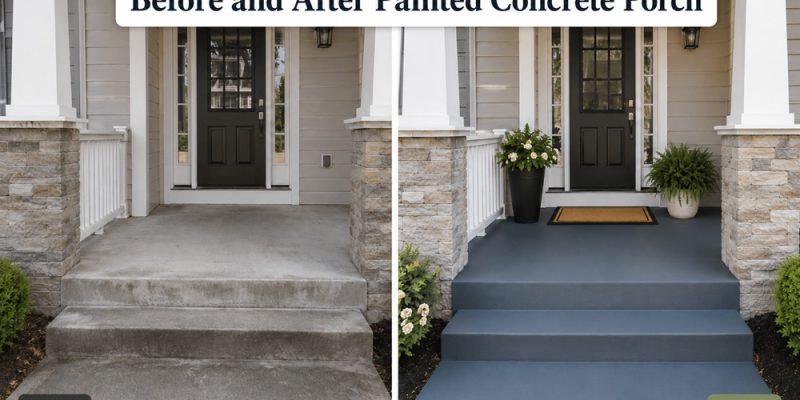
A painted concrete porch is one of the cheapest upgrades that changes how a whole house feels from the street.
It’s also the project people redo the most. The paint peels, chips, and flakes, and they blame the paint. Almost always, the real problem was the prep and the paint choice, not the color.
Here’s the honest version: the before-and-after transformation you want is decided before you open the paint can. This walkthrough covers what actually makes it last.
Quick answer: To paint a concrete porch that lasts, clean and degrease the surface, etch smooth concrete with an etching solution or muriatic acid, repair cracks, apply a concrete bonding primer, then finish with two thin coats of masonry or epoxy porch paint. Skip prep and it will peel within a season.
Why Does Painted Concrete Peel So Fast?
Concrete is smooth, dense, and slightly porous. Paint struggles to grip it. Add weather and the problems multiply.
The main peel triggers:
- No etching. Fresh paint slides off slick concrete with nothing to bond to.
- Trapped moisture. Concrete holds water longer than it looks. Paint over damp concrete and it lifts.
- Freeze-thaw cycles. Water gets under the film, freezes, expands, and pops the paint off.
- Salt exposure. De-icing salt chews through standard porch paint.
- Wrong paint. Basic interior-grade or thin porch paint can’t handle foot traffic and weather.
Homeowners on home-improvement forums are blunt about it. The common refrain is that previously painted or older concrete “seldom lasts long” and becomes a maintenance job every couple of years. That’s the reality to plan around, not fight.
The Before: What the Surface Should Look Like First
The “before” photo everyone shares is the ugly one. The “before” that matters is the surface right before primer.
At that point it should be:
- Clean, with no dirt, grease, mildew, or chalky residue
- Etched, with a slightly gritty texture like fine sandpaper
- Crack-free, with any gaps filled and cured
- Fully dry, given 24 hours or more if humidity is high
If you skip straight from a dirty slab to paint, the before-and-after becomes a before-and-peeling.
How to Paint a Concrete Porch, Step by Step
Follow the order. Each step sets up the next one.
Step 1: Deep clean the concrete
Sweep everything off. Then wash hard.
- Pressure wash if you can, working in passes from a rough spray to a detergent scrub.
- No pressure washer? Use a concrete-safe degreaser like a simple cleaner and a stiff brush.
- Paint will not stick to grease, dirt, or mildew, so this step is non-negotiable.
Step 2: Repair cracks and chips
- Fill hairline and larger cracks with a flexible concrete filler or a stretchable caulk that moves with seasonal shifting.
- A rigid patch can re-crack; a flexible one keeps moisture out longer.
- Let repairs fully cure before moving on.
Step 3: Etch the surface
This is the step most DIYers skip and most regret skipping.
- Use a concrete etching solution or muriatic acid to open the pores so primer can bond.
- Always use plastic watering cans and buckets, never metal. Acid reacts with metal.
- Rinse thoroughly and let it dry completely, ideally 24 hours.
- On textured, broom-finished concrete, a floor prep tool or wire brush helps scuff it.
Step 4: Prime with a concrete bonding primer
- Use a masonry or concrete bonding primer made for exterior use, not a generic primer.
- Cut in the edges with a brush, then roll the field with a half-inch nap roller. The thicker nap reaches into the texture.
- Two thin coats of primer beat one thick coat. Let each dry per the label.
Step 5: Paint with the right product
- Choose acrylic or 1-part epoxy concrete and porch floor paint, not thin general paint.
- Apply thin coats. Thick coats look faster but peel first.
- Two coats is the norm. Let each dry fully before the next.
- Add an anti-slip additive to the topcoat for safety, especially on steps.
- Work back to front so you don’t paint yourself into a corner.
Step 6: Seal it (optional but smart)
- A clear concrete sealer over dry paint locks in the finish and adds weather resistance.
- Apply evenly and thin. Too much sealer stays tacky. If it does, hose it off and squeegee the excess.
Which Paint Actually Lasts on a Concrete Porch?
Not all “porch paint” is equal. Here’s how the common options compare.
| Paint type | Durability | Best for | Trade-off |
|---|---|---|---|
| Basic porch & patio paint | Low to medium | Low-traffic, mild climates | Peels faster in freeze-thaw and salt |
| Acrylic concrete paint | Medium | General exterior use | Needs good prep to last |
| 1-part epoxy porch paint | High | Foot traffic, water, salt, temp swings | More prep, plan to recoat every few years |
| Concrete stain | Medium to high | Solid color that resists peeling | Different look; solid film, not a coating you scrub |
| Concrete resurfacer | Very high | Worn or previously coated surfaces | More product and labor, longer life |
For a porch that takes weather and feet, a 1-part epoxy or a quality acrylic with real prep is the sweet spot. Clear topcoats alone fail fastest on flat, sun-exposed surfaces, so they’re not a standalone answer.
How Long Will a Painted Concrete Porch Last?
Set expectations honestly and you won’t be disappointed.
| Scenario | Realistic lifespan before recoat |
|---|---|
| Poor prep, basic paint | A few months to one season |
| Good prep, basic porch paint | 2 to 3 years |
| Full prep, epoxy or quality acrylic | 3 to 5 years, sometimes more |
| Resurfacer system | Up to a decade or more |
Even the best painted porch is a maintenance item. Plan to touch up scuffs and recoat every few years. That’s not failure; that’s normal for a horizontal surface exposed to weather.
What a Real Before-and-After Costs
One widely shared porch makeover turned a peeling, dated porch into a fresh painted space for roughly $775 total. The revealing part: about $400 of that went to a mason reinforcing the block wall, not to paint.
That’s the lesson. On a real transformation, structural prep and repair often cost more than the paint itself. Budget for the surface, not just the color.
Rough DIY budget for an average porch:
- Cleaner and degreaser: low cost
- Etching solution or muriatic acid: low cost
- Crack filler or flexible caulk: low cost
- Concrete bonding primer: moderate
- Epoxy or acrylic porch paint (two coats): the biggest line item
- Sealer and anti-slip additive: moderate
Common Mistakes That Ruin the After
Learn from the porches that peeled.
- Painting over damp concrete. It looks dry on top and holds water underneath. Wait longer than you think.
- Skipping the etch on smooth concrete. Slick surface, no bond, fast peel.
- Thick coats. They trap solvent, dry unevenly, and flake.
- Painting right before a cold snap. Concrete keeps curing; a temperature drop wrecks adhesion.
- Not removing old failing paint. New paint only sticks as well as the layer beneath it. Loose paint under fresh paint peels together.
- Metal buckets for acid. They react. Plastic only.
How Do You Keep a Painted Porch Looking New?
Maintenance is simple and it extends the life a lot.
- Sweep debris weekly so grit doesn’t grind the finish.
- Rinse off dirt as needed; a low-pressure wash twice a year works well.
- A wet vacuum with a little cleaner handles in-between touch-ups.
- Skip harsh chemicals that break down the sealant.
- Touch up small scuffs before they spread into peeling patches.
Frequently Asked Questions
Do I need to prime concrete before painting it? Yes for bare concrete. A concrete bonding primer is what makes the paint grip. For already-painted concrete that’s still sound, you may not need primer unless it’s peeling after prep.
Can I repaint over old painted concrete? Yes. Remove loose and peeling paint by sanding or scraping, degloss the rest, clean it, and prime any bare spots. Then repaint.
Can I use a sprayer instead of a roller? Yes, a sprayer gives a smoother, even finish on large areas. Test a small section first and keep moving to avoid drips. Many people still back-roll to work paint into the texture.
How long should the porch dry before I walk on it? Follow the paint label, but plan for foot traffic after a day and full cure over several days. Rushing it marks the finish.
Is a painted concrete porch slippery when wet? It can be. Mix an anti-slip additive into the topcoat, especially on steps and high-traffic paths.








Comments