
 By
By 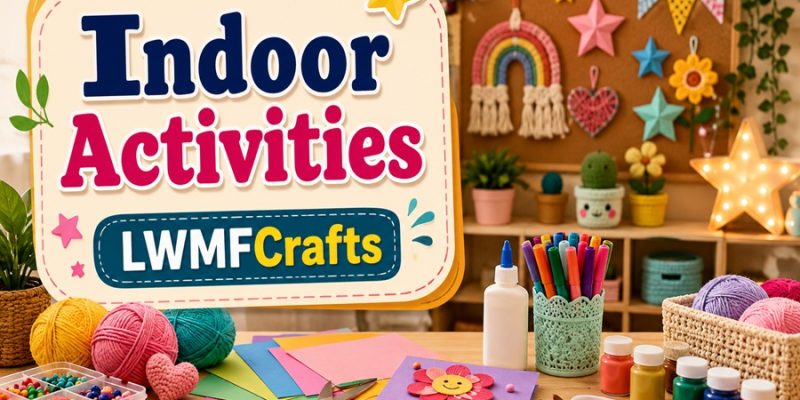
Rainy afternoon. Cancelled plans. A restless kid circling the couch. You don’t need a store run or a big budget to fix it. You need a shortlist of indoor activities and a box of simple LWMFCrafts — the “little-work, more-fun crafts” that turn spare paper and glue into an hour of quiet focus.
This guide is built for real homes. Everything here uses supplies you likely already own. Each idea says who it’s for, how long it takes, and what skill it quietly builds. No filler. No “buy this kit” pressure.
The best indoor activities mix three types — creative (crafts, painting), physical (obstacle courses, dance), and social (board games, cooking together). Rotate between them every 30–45 minutes to hold attention. For zero-prep fun, start with a paper craft, a blanket fort, or a scavenger hunt using items already in your home.
What Are LWMFCrafts?
LWMFCrafts stands for Low-Work, More-Fun Crafts — projects with a five-minute setup and a big payoff in engagement. The idea is simple: the less time you spend prepping, the more likely you are to actually do the craft.
A true LWMFCraft passes three tests:
- Under 5 minutes to set up. No special trip, no complex tools.
- Uses common household items. Paper, tape, glue, markers, cardboard, string.
- Works for a range of ages. Scalable up for adults, down for toddlers.
Craft brands and educators push elaborate kits, but the most-repeated projects in family blogs and community threads are almost always the plain ones — paper plate animals, sensory bottles, salt-dough shapes. Simplicity is the feature, not a compromise.
Why Indoor Activities Matter More Than “Killing Time”
It’s easy to treat a rainy day as a problem to survive. It’s actually an opening.
When kids get bored with materials within reach, that boredom often sparks the most creative play. A blanket fort isn’t just shelter — building it forces negotiation: Where does it go? How big? Who decides? That messy figuring-out is the activity, and it’s where sharing, patience, and problem-solving get practiced.
For adults, intentional indoor time works as a reset. Slowing down for a craft or a puzzle shifts the brain out of scroll-mode and into focus. The payoff isn’t the finished object — it’s the calm that comes from making something with your hands.
The three-bucket rule keeps a long day from collapsing into screens:
| Activity type | Purpose | Examples |
|---|---|---|
| Creative | Focus, self-expression | Painting, LWMFCrafts, origami, DIY decorations |
| Physical | Burn energy, motor skills | Indoor obstacle course, dance party, tape floor games |
| Social | Connection, communication | Board games, cooking challenge, story round-robin |
Rotate through all three across a day. Leave gaps on purpose — unstructured minutes are where the best ideas surface.
Easy LWMFCrafts for Kids (5-Minute Setup or Less)
These are the boredom-busters. Grab, make, done.
Paper Plate Animals
The workhorse of kid crafts. A single paper plate becomes a fish, a snake, a lion, or a jellyfish with paint, scissors, and glue.
- Setup: Paper plates, paint or markers, scissors, glue.
- Builds: Cutting control, color mixing, planning.
- Scale it up: Older kids can make masks or a full paper-plate zoo.
Sensory Bottles
Fill a clear bottle with water, a squirt of glitter glue, and small beads or sequins. Seal the cap with tape. Shake and watch the swirl settle. Calming and mesmerizing.
- Setup: Empty bottle, water, glitter glue, small objects.
- Builds: Focus, calm-down skills, cause-and-effect learning.
Salt-Dough Shapes
Mix flour, salt, and water into a moldable dough. Shape it, then air-dry or bake low. Paint the next day for a two-session craft.
- Setup: Flour, salt, water, cookie cutters.
- Builds: Fine motor strength, patience across a drying window.
Window Art
Washable paint or a cellophane-and-dish-soap “faux stained glass” turns a rainy window into a canvas. Bonus: rain on decorated glass looks incredible.
- Setup: Washable paint or cellophane, dish soap.
- Builds: Spatial design, color layering.
Superhero Cape Upcycle
Cut the back and sleeves off an old t-shirt to shape a cape. Decorate with fabric markers, fasten with safety pins. A craft and a costume that fuels an hour of pretend play afterward.
- Setup: Old t-shirt, fabric markers, safety pins.
- Builds: Upcycling awareness, imaginative play, creativity.
Indoor Activities for Adults That Aren’t a Puzzle-and-Candle List
Adults deserve more than “do a jigsaw.” These are the resets that actually work.
- Home wine or tea tasting. Line up three options, take notes, compare. Structure makes it feel like an event, not a Tuesday.
- Themed dinner or cooking challenge. Pick a country or a mystery-box of ingredients. Cook it. The constraint is the fun.
- Candle or soap making. A hands-on LWMFCraft for grown-ups. Pick scents, pour, and you’ve made something you’ll actually use.
- Virtual escape room. Ironic, addictive, and genuinely good for a group video call.
- Learn a small skill. One card trick, one origami crane, one chord. Small wins compound.
- Bread from scratch. Slow, tactile, and the house smells unreal by the end.
The thread running through all of these: intention. Plan it, even loosely, and a dull evening turns into something you look forward to.
Indoor Date Ideas for Couples
Cold night in? Skip the screen scroll.
- Two-person cooking challenge — one savory, one dessert, no recipes allowed.
- Candle-making side by side — a shared object to keep afterward.
- Build a living-room fort and watch a movie inside it. Forts aren’t only for kids.
- Interactive debate night — pick a silly topic, argue opposite sides, switch halfway.
Zero-Supply Indoor Activities (When You Have Nothing on Hand)
No craft box? No problem. These need only what’s already in the house.
- Indoor scavenger hunt. Write or draw clues that lead room to room. Scale difficulty to the age.
- Blanket fort. Chairs, blankets, clips. The negotiation is half the fun.
- Story round-robin. Each person adds one sentence. Chaos guaranteed.
- Tape floor games. Masking-tape lines become hopscotch, a balance beam, or a target zone.
- Paper airplane distance contest. Fold, throw, measure, iterate. Sneaky physics lesson.
- Puppet show. Socks, paper bags, or drawn cutouts. Then perform it.
How to Set Up a Space Kids Will Actually Use
Half of a successful craft day is the setup. Get this right and cleanup stops being a battle.
- Keep supplies within reach. A low table and a bin of paper, crayons, and glue invites independent play. When kids can grab materials themselves, they start projects without you.
- Store by category. Bins for “paper,” “sticky,” “color” make both starting and cleaning faster.
- Protect the surface first. A cheap plastic tablecloth means you say “yes” to messy crafts instead of “not today.”
- Leave a cozy corner. A soft spot for reading or small crafts lets kids recharge between high-energy bursts.
LWMFCrafts by Age: A Quick Match Table
| Age group | Best-fit crafts | Skill focus |
|---|---|---|
| Toddlers (2–4) | Sticker art, sensory bottles, finger painting | Grip, color recognition |
| Kids (5–8) | Paper plate animals, salt dough, window art | Cutting, planning, patience |
| Tweens (9–12) | Origami, DIY bracelets, mini book making | Precision, sequencing, storytelling |
| Teens & adults | Candle making, upcycled decor, canvas painting | Design, focus, self-expression |
The One Insight Most Craft Lists Miss
Nearly every “indoor activities” roundup online lists what to make. Almost none explain when to stop.
Here’s the overlooked rule: end the craft before the child does. A project that wraps while attention is still high leaves a positive memory and a reason to come back tomorrow. Drag it past the fade and the same craft becomes a chore both of you resent.
The second miss: the mess is part of the craft, not the aftermath. When you fold cleanup into the activity — “the glue goes back in the bin, that’s the last step” — you turn tidying into a normal beat of the project instead of a punishment at the end. Kids who own the cleanup step start more projects, because starting no longer means a fight later.
Neither idea shows up in the typical top-ranking list. Both are what separate a one-time craft from a habit.
Frequently Asked Questions
What are indoor activities that don’t require screen time?
Almost all the best ones. Classics hold up: puzzles, board games, drawing, baking, play dough. Less obvious picks include a paper-airplane distance contest, origami from a simple guide, a one-sentence-each story round-robin, or a puppet show. For older kids, writing and illustrating a mini book can fill a whole afternoon.
How do I keep kids entertained indoors all day without buying anything?
Rotate activity types every 30–45 minutes — something physical, then something creative, then something social. Use household items: tape for floor games, blankets for forts, paper for crafts. Leave unstructured gaps; boredom with materials nearby is what sparks independent play.
What is the easiest LWMFCraft for a complete beginner?
Sensory bottles. Fill a clear bottle with water and glitter glue, drop in beads, seal the cap. There’s no way to “fail” it, setup takes two minutes, and the result is genuinely calming to watch.
What indoor activities work for adults, not just kids?
Home wine or tea tastings, themed cooking challenges, candle making, virtual escape rooms, and learning one small skill (a card trick, an origami crane, a single chord). The key is planning it with intention rather than defaulting to a screen.
How do I stop craft time from ending in a meltdown?
End the craft while attention is still high, not after it fades. Build cleanup into the activity as the final step rather than a separate chore. Both keep the memory positive and make kids more likely to start again next time.








Comments